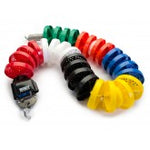
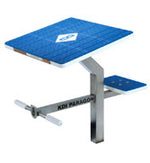
Competitive swim equipment isn't something you should have to figure out on your own.
We've helped hundreds of teams, from youth swim clubs and high schools to colleges, universities, and competitive aquatic facilities, select the right equipment for their programs. With decades of aquatics industry experience, we understand that every facility has different requirements, and we're here to help you find the right solution.
From equipment specifications and competition requirements to compatibility, installation, and replacement needs, you can count on our team for knowledgeable support before, during, and after your purchase.
Not sure where to start? Use this guide to help narrow down your options, or contact our team for help choosing the right equipment for your facility.
Racing Lane Requirements
World Aquatics
USA Swimming
NCAA
NFHS
USMS
Floating lane dividers
Required
Required
Required/available as specified
Required
Required
Lane line construction
Wave-dampening floating lane lines
Wave-dampening floating lane lines
Floating lane markers
Floating lane lines
Floating lane lines
Lane line diameter
Current rule does not establish one universal diameter
2–6"; 11 cm minimum for National Championships
Not specified
Not specified
2–6"; 11 cm minimum for National Championships
End-wall anchoring
Required/recessed
Required/recessed
Permanent recessed anchoring provision
Required
Required/recessed
Contrasting end section
Required/defined by course
Required/defined by course
Recommended: final 15 ft.
Required where specified
Required/defined by course
15 m lane marker
Required
Required
Recommended
Required
Required
Outside lane lines
Competition dependent
Competition dependent
Required/available as championship configuration
Competition dependent
Competition dependent
Starting Platform Requirements
World Aquatics
USA Swimming
NCAA
NFHS
USMS
Starting platforms
Required
Required where used
Required
Required where used
Required where used
Platform height
19.7"-29.5" (0.50-0.75 m)
19.7"-29.5" for 25 m/50 m; <30" for 25 yd.
<30" above water
20"-30"
19.7"-29.5" for metric courses; <30" for 25 yd.
Platform top size
≥19.7" x 19.7" (0.50 x 0.50 m)
≥19.7" x 19.7"
≥20" x 20"
≥20" x 20"
≥20" x 20"
Platform slope
<10°
<10°
<10°
<10°
<10°
Non-slip platform surface
Required
Required
Required
Required
Required
Platform front edge
Flush with end wall
Flush with end wall
Flush with end wall
Flush with end wall
Flush with end wall
Backstroke starting grips
11.8"-23.6" above water
12"-24" above water
<30" above water
12"-24" above water
12"-24" above water
Lane numbers on blocks
Required
Required
Required
Required
Required
Anchored Blocks
Required
Required
Required
Required
Required
Track-style blocks
Required where applicable
Permitted/required where applicable
Permitted; championship facilities may require
Not specified nationally
Permitted/required where applicable
Starting block wedge
Permitted where applicable
Permitted
Permitted
Permitted where applicable
Permitted
Timing Equipment Requirements
World Aquatics
USA Swimming
NCAA
NFHS
USMS
Automatic timing
Required/approved for applicable competition
Required/approved for applicable competition
Required/approved for championship competition
Permitted/used where available
Required/approved for applicable competition
Touchpads
Approved equipment
Approved equipment
Championship facilities use electronic timing/touchpads
Permitted
Approved
Touchpad width
at least 2.4 m
at least 2.4 m
6.5 ft. recommended for 7–8 ft. lanes
Not nationally specified
Facility/timing specifications apply
Touchpad thickness
Equipment specification
Equipment specification
~1"
Not specified
Equipment specification
Touchpad placement
Flush/at water level
At water level
Centered in lane and at/below water level
Facility dependent
At wall/water level
Backup timing
Required
Required
Required
Required
Required
Manual timing
Required as backup
Required as backup
Required as backup
Required as applicable
Required as backup
Relay judging/takeoff system
Approved electronic system where used
Approved electronic system
Relay Judging Platforms required for applicable NCAA championship competition
New 2026-27 emphasis
Permitted/approved
Backstroke Flag Requirements
World Aquatics
USA Swimming
NCAA
NFHS
USMS
Backstroke flags
Required
Required
Required
Required
Required
Distance from end wall: 25 yard course
N/A
15 ft.
15 ft.
5 yd.
15 ft.
Distance from end wall: 25 m course
5 m
5 m
5 m
5 m
5 m
Distance from end wall: 50 m course
5 m
5 m
5 m
Not applicable to standard NFHS competition
5 m
Height above water
1.8 m
7 ft. minimum; course specific
7 ft.
7 ft.
7 ft. / 1.8 m minimum
Pennants per lane
Not specified as a minimum number
At least 3
At least 3
At least 3
At least 3
Pennant base
20 cm attached side; 40 cm other sides
6–12"
6–12"
Not specified
6–12"
Pennant vertical length
40 cm sides
12–18"
12–18"
Not specified
12–18"
Contrasting colors
Required
Required
Two or more alternating contrasting colors
Required
Required
Backstroke Ledge Requirements
World Aquatics
USA Swimming
NCAA
NFHS
USMS
Backstroke ledge
Required where applicable to competition
Permitted when used
Required where applicable; championship facilities
Permitted by state adoption
Permitted
Minimum ledge length
60 cm
65 cm
60 cm
State association specification
60 cm
Ledge height
8 cm
8 cm
8 cm
State association specification
8 cm
Ledge width
2 cm
2 cm
2 cm
State association specification
2 cm
Ledge slope
10°
10°
10°
State association specification
10°
Adjustment range
4 cm above to 4 cm below water level
4 cm above to 4 cm below
4 cm above to 4 cm below
State association specification
4 cm above to 4 cm below
Minimum water depth
Not separately specified for ledge use
4 ft.
4 ft.
6 ft.
4 ft.
Identical ledges in every lane
Required when used
Required
Required when used
State association specification
Required when used
Pool Marking Requirements
World Aquatics
USA Swimming
NCAA
NFHS
USMS
Lane bottom markings
Required
Required
Required
Required
Required
Lane line width
Specified by facility regulations
10" minimum at applicable locations
10" minimum
Required
10" minimum
Lane line termination
Course-specific
Course-specific
6 ft. 7 in. from each end wall
Required
6 ft. 7 in. from each end wall
End-wall targets
Required
Required
10" minimum width; extends at least 3'4" below water
Required
Required
15 m markings
Required
Required
Recommended
Required
Required
Backstroke turn indicators
Required
Required
Required
Required
Required
Lane numbering
Required
Required
Required
Required
Required
Pool & Lane Width Requirements
World Aquatics
USA Swimming
NCAA
NFHS
USMS
Standard lane width
2.5 m at World Championships
Minimum 7 ft. in applicable facilities; wider configurations preferred at higher level facilities
6 ft. minimum for championship course; wider lanes recommended/preferred
7 ft. minimum
7 ft. minimum
Championship lane configuration
8 competition lanes; outside lanes may be included in facility layout
Competition dependent
At least 6 x 6 ft. lanes; 8 lanes recommended
Competition dependent
Competition dependent
Wider lanes
Preferred for major championships
Preferred at higher level competition
/ 9 ft. configurations preferred for newer facilities
Not nationally specified
Facility dependent
Outside buffer
Championship/facility dependent
Facility dependent
Additional space outside outer lanes recommended/required by Championship facility specifications
Facility dependent
Facility dependent
Swim Racing FAQs
Who sets the rules for competitive swimming?
Rules vary by competition level. Major organizations include World Aquatics, USA Swimming, NCAA, NFHS, and U.S. Masters Swimming.
What is World Aquatics?
World Aquatics is the international governing body for aquatic sports, including swimming. It was formerly known as FINA.
What is USA Swimming?
USA Swimming is the national governing body for competitive swimming in the United States.
What is NCAA swimming?
NCAA swimming is collegiate swimming governed under NCAA rules and regulations.
What is NFHS swimming?
NFHS provides rules for high school swimming and diving competition, with state associations potentially establishing additional requirements.
What is U.S. Masters Swimming?
U.S. Masters Swimming governs Masters swimming in the United States and provides rules and resources for Masters competition.
Do all competitive swimming organizations have the same equipment requirements?
No. While many standards overlap, different organizations can have different requirements for equipment, pool dimensions, starting systems, and other competition elements.
Which rules should my pool follow?
Your facility should follow the rules applicable to the competitions it hosts. A pool that hosts multiple types of competition may need to accommodate requirements from more than one organization.
Can state associations have different requirements than NFHS?
Yes. State associations can establish policies or requirements affecting high school competition, so facilities should verify requirements with the applicable state association.
What are the requirements for pool depth during competition?
Required water depth depends on the competition type and pool configuration. Starting areas and other portions of the pool can have specific requirements.
Are backstroke starting ledges required?
Not universally. Their use and specifications depend on the governing organization's rules and the competition being hosted.
Can one pool meet multiple competition standards?
Yes. Many facilities are designed to host multiple levels of competition, but the equipment and configuration should be evaluated against each applicable standard.
Should I verify regulations before purchasing competition equipment?
Yes. Verify current requirements before purchasing or installing competition equipment, particularly for major projects or equipment that affects competition compliance.
Can Poolweb help me find equipment that meets competition requirements?
Yes. Poolweb can help you identify products based on your facility's needs and the applicable competition requirements. Always verify current rules before finalizing a purchase.
What equipment does a competitive swimming pool need?
A competitive swimming pool may require starting blocks, racing lane lines, backstroke flags, timing equipment, pace clocks, scoreboards, and other swim meet equipment. The exact equipment needed depends on the pool configuration, level of competition, and governing organization.
What equipment is required to host a swim meet?
Depending on the type of competition, a swim meet may require starting blocks, racing lane lines, backstroke flags, timing equipment, touchpads, backup timing equipment, pace clocks, scoreboards, lane equipment, and equipment for officials and meet management. Requirements vary by competition level and governing organization.
What is the difference between competitive and recreational pool equipment?
Competitive pool equipment is designed specifically for organized swimming competition and training. It may include competition starting blocks, wave-dissipating racing lanes, timing systems, backstroke flags, scoreboards, and other equipment designed to meet competition standards.
How do I know if my swimming pool is competition-ready?
Start by identifying the organizations whose competitions your facility will host. Then evaluate your pool dimensions, water depth, starting blocks, anchors, racing lanes, backstroke flags, timing equipment, and other competition equipment against the applicable requirements.
How do I choose the right starting block for my pool?
Consider your competition requirements, pool configuration, existing anchor system, starting block dimensions, mounting configuration, and desired features. If you are replacing existing blocks, identifying the current anchor configuration is one of the most important first steps.
What is a starting block anchor, and why is it important?
A starting block anchor is the hardware installed into the pool deck that secures the starting block. When replacing starting blocks, the existing anchor configuration determines whether a new block can be installed without replacing or modifying the anchors.
Can I replace my starting blocks without replacing the existing anchors?
Possibly. Some replacement starting blocks and retrofit configurations are designed to work with existing anchors. Compatibility depends on the anchor type, post dimensions, configuration, and spacing.
How do I know what starting block anchors I have?
Start by taking clear photos of the starting block, mounting posts, and connection points in the pool deck. Measurements such as post diameter or dimensions and center-to-center spacing for dual-post configurations can also help identify the existing system.
What measurements do I need when replacing starting blocks?
Useful measurements include the size and shape of the mounting posts and, for dual-post blocks, the distance between posts measured center-to-center. Photos of the existing starting block and anchors are also extremely helpful when determining compatibility.
What does "on center" mean when measuring starting block anchors?
"On center" refers to the distance from the center of one mounting post to the center of another. For example, a dual-post starting block listed as 20 inches on center has 20 inches between the centers of its two mounting posts.
Can starting blocks be retrofitted to existing anchors?
In some cases, yes. Retrofit solutions may allow a new starting block to work with an existing anchor configuration, potentially reducing the need for new deck work. Compatibility must be evaluated based on the existing installation.
What are competition racing lane lines?
Competition racing lane lines separate swimming lanes while helping reduce wave action between lanes. They are designed specifically for competitive swimming and provide greater wave attenuation than basic recreational lane lines.
How do I choose the right racing lane lines for my pool?
Consider your pool length, number of lanes, lane width, attachment hardware, and intended competition level. Common configurations include 25-yard, 25-meter, and 50-meter pools, but the exact lane-line length should be determined from your pool and hardware configuration.
What should I consider before purchasing competitive swim equipment?
Consider the pool's dimensions and existing infrastructure, the competitions your facility hosts, applicable governing-body requirements, compatibility with existing equipment, installation requirements, and your facility's future needs. For replacement projects, photos and measurements of existing equipment can help determine the best solution.
Upgrading Existing Blocks
Upgrading starting blocks does not always mean removing existing anchors or modifying
your pool deck. Depending on the starting blocks currently installed, retrofit and
replacement options may allow you to upgrade your blocks while using the existing anchor
configuration.
Existing anchor size, post configuration, spacing, and the current starting block model are
all important when determining which replacement options will work for your pool.
Need Help Finding the Right Replacement?
Our Commercial Sales Team can help determine which starting blocks are compatible with
your existing installation. To help us identify your options, please provide:
Photos of the existing starting block
Manufacturer and model, if known
Anchor/post configuration: single post or dual post
Post dimensions, including diameter or square dimensions
Distance between posts, measured center-to-center for dual-post installations
Pool deck dimensions or photos of the anchor installation


 Free Shipping Over $100
 Hassle-Free Returns
 Net 30 Payment
 World-Class Support
 Top Brands
 Competitive Prices
 Fast Shipping
 Expert Support
 Top Brands
 Competitive Prices
 Fast Shipping
 Expert Support