1 What the Law Requires
Under the 2010 ADA Standards for Accessible Design, all public and commercial pools must provide accessible means of entry and exit. This applies to hotels, fitness clubs, country clubs, public parks, schools, hospitals, and any facility open to the public under Title II (government) or Title III (private/commercial).
How Many Lifts Do You Need?
Pools under 300 linear feet of pool wall require at least one accessible entry. Pools over 300 linear feet require two accessible entry points — one must be a primary method (lift or sloped entry), the second can be any of the five approved types. Each pool must have its own dedicated lift; sharing between pools is not permitted.
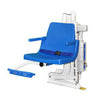
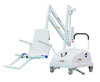
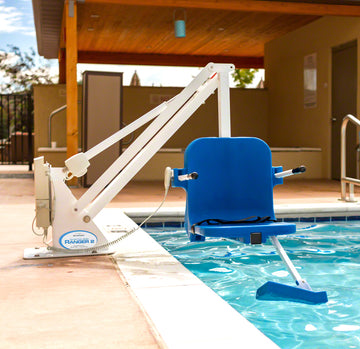
A pool lift counts as a primary means of accessible entry and is the most practical and cost-effective solution for most commercial in-ground pools.
2 ADA Hard Requirements for Pool Lifts
Any lift installed for public/commercial use must meet all of the following specifications per ADA Section 1009.2:
Minimum Weight Capacity
300 lbs
Higher capacity recommended for high-use facilities
Seat Height Above Deck
16" – 19"
Must position at water level when submerged
Minimum Seat Width
16"
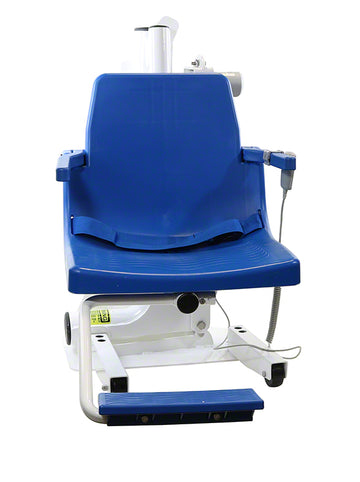
Solid seat required with passive restraint
Deck Clearance
36" × 48"
Clear floor space for wheelchair maneuvering
Accessible Route Width
36" min
Path to lift must be obstacle-free
Control Force
≤ 5 lbs
Operable by users with limited hand function
Operable from Both Sides
The lift must be controllable from both the pool deck and from the water — controls must remain unobstructed at all times. The lift must also be available whenever the pool is open, meaning it must be fixed in place (not moveable during operating hours).
3 Features to Look For
- Weight capacity ≥ 300 lbs — Consider 400–500 lb models for broader user coverage in high-traffic settings.
- Corrosion-resistant construction — Look for marine-grade stainless steel or powder-coated aluminum; essential for chlorinated and saltwater environments.
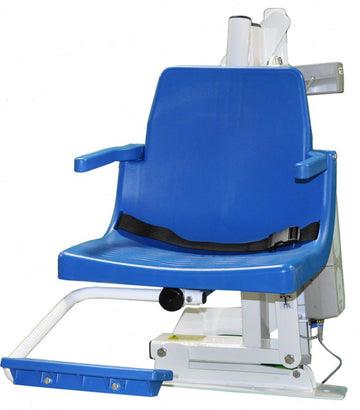
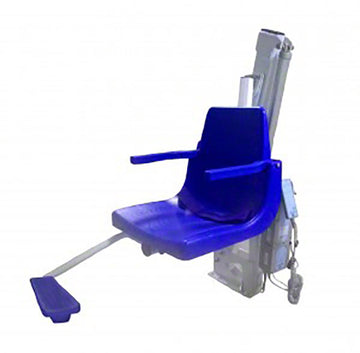
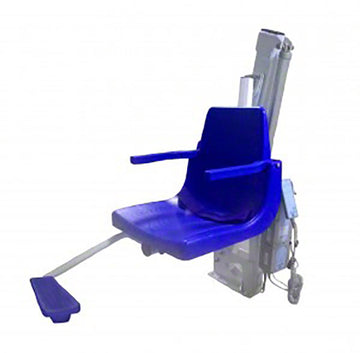
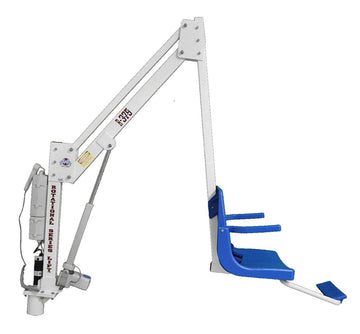
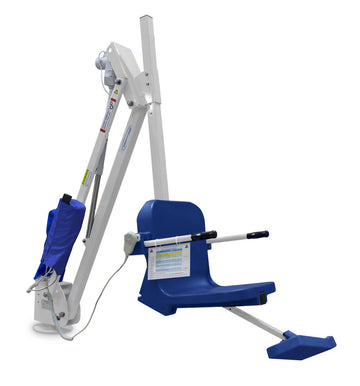
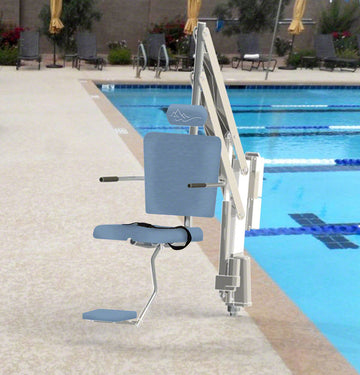
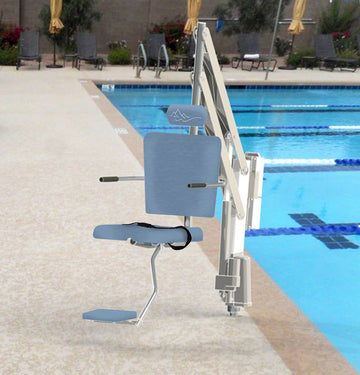
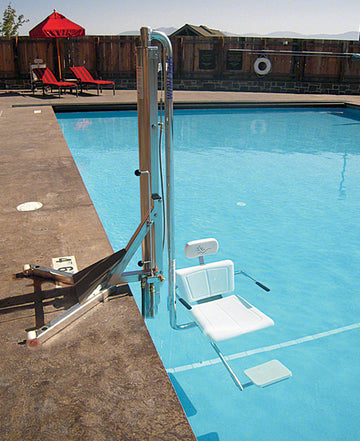
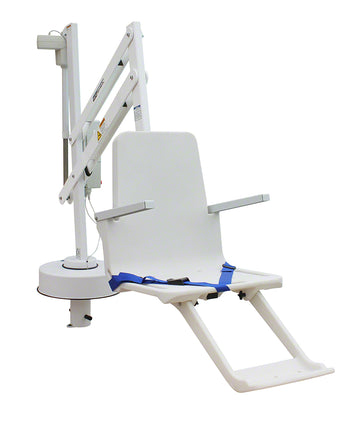
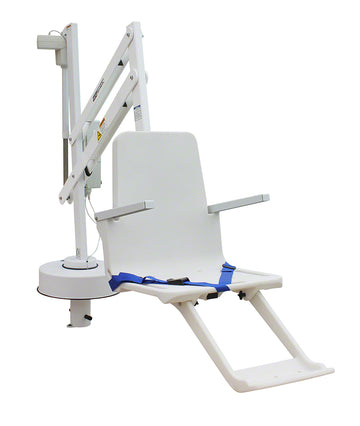
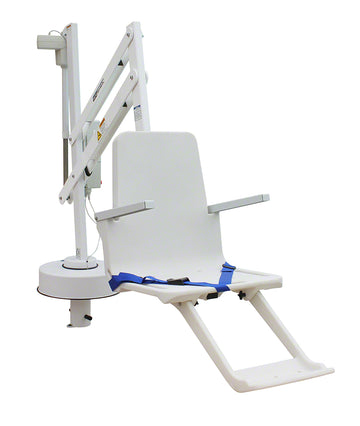
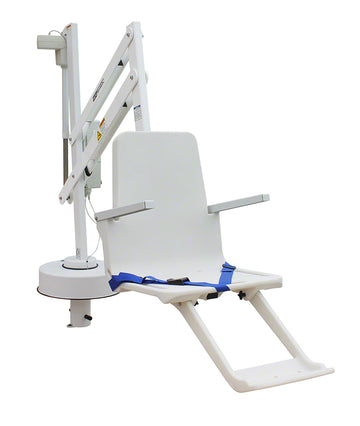
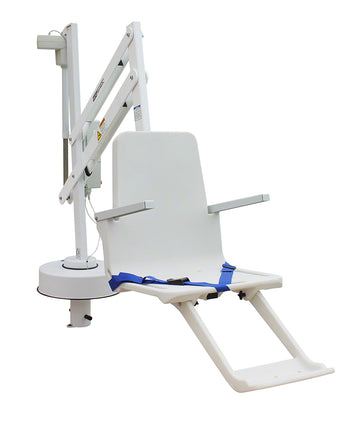
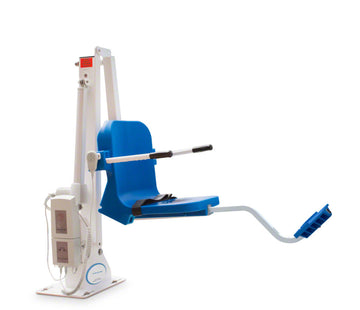
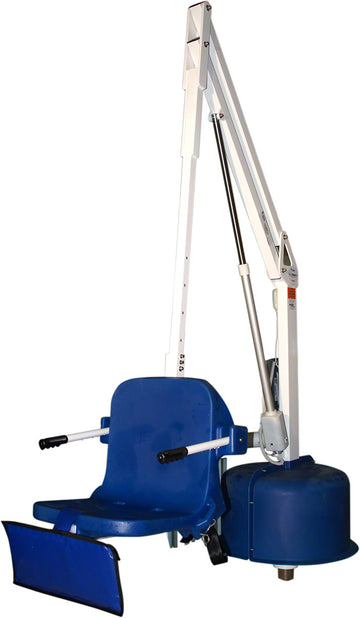
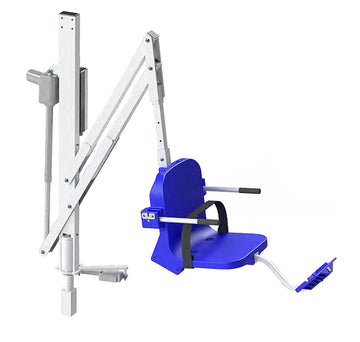
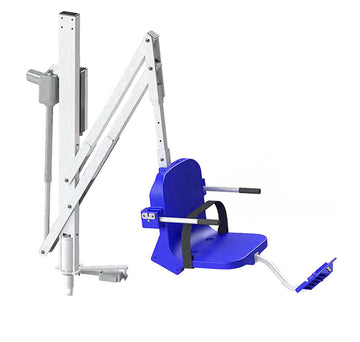
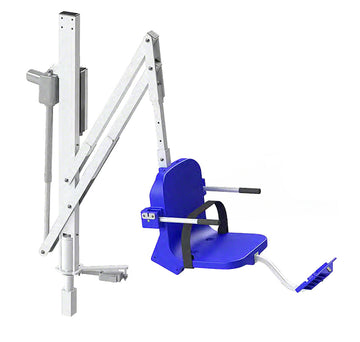
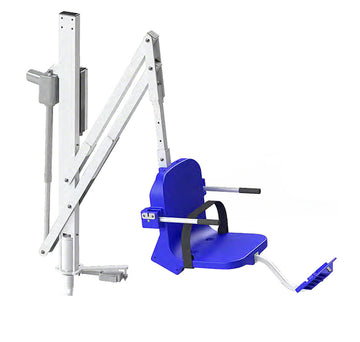
- 360° powered rotation — Allows the seat to swing over the deck for easy transfer from a wheelchair, then rotate over the water.
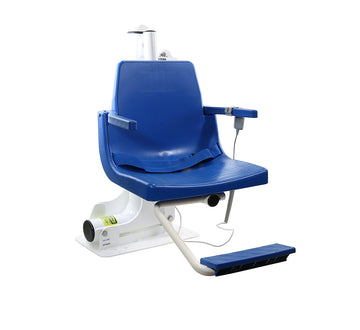
- Handheld waterproof remote — Must be operable by users with limited dexterity; wireless remotes are most convenient.
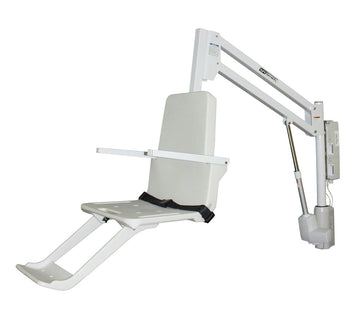
- Footrest — Required by ADA. Confirms user safety during lift operation.
- Armrests — At least one armrest that raises to allow lateral transfers, one that stays fixed for support.
- Anchor sleeve system — A removable design using a deck anchor sleeve lets you remove the lift when the pool is closed while keeping it fixed during operating hours.
- UL / NSF Listing — Third-party certification verifies electrical safety for poolside environments.
- 5-year warranty minimum — Industry standard for commercial-grade lifts from major manufacturers.
4 Leading Manufacturers
The following brands are well-established in the commercial ADA pool lift market and produce certified, widely-supported products:
Aqua Creek
Ranger 2 (400 lb), Mighty 400, Scout Excel — popular for hotels and commercial pools
Spectrum Aquatics
Motion Trek BP 350/400, Traveler BP500, Gallatin hydraulic — strong commercial line
S.R. Smith
Widely used in hotels and rec facilities; known for durability and service network
Global Pool Products
C-450 Commercial — heavy-duty commercial option with high weight ratings
5 Typical Cost Breakdown
| Item |
Notes |
Typical Range |
| Battery-powered lift (commercial grade) |
300–500 lb capacity, major brand |
$4,000 – $8,000 |
| Professional installation |
Deck sleeve anchoring, electrical grounding |
$500 – $1,500 |
| Deck modification (if needed) |
Core drilling, concrete work for sleeve |
$200 – $800 |
| Annual maintenance |
Inspection, battery replacement, seal service |
$150 – $400/yr |
Tax Incentives
Commercial facilities may be eligible for ADA tax credits (up to $5,000/year) and deductions (up to $15,000/year) to offset the cost of accessibility improvements. Consult your tax advisor.
6 Installation & Ongoing Compliance
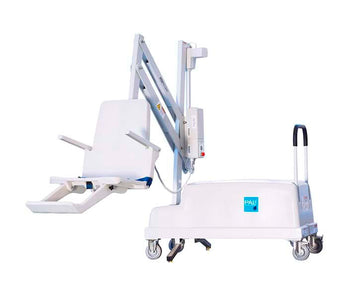
Professional installation is required even for portable lifts — improper installation can void warranties and create liability. Key considerations:
- Hire a certified installer — Ensure all deck anchoring, electrical grounding, and clearance requirements are met per ADA Section 1009.2 and local codes.
- Establish a charging protocol — Battery-powered lifts must be fully charged at all times during pool operating hours. Designate a staff member responsible for daily checks.
- Train staff — All pool staff should know how to operate and troubleshoot the lift, and assist users if needed.
- Document maintenance — Keep a log of inspections, battery charges, and any service performed. This is important for demonstrating ongoing ADA compliance.
- Keep the lift poolside at all times — The lift must remain installed and operational whenever the pool is open. It cannot be stored away between uses.
- Solicit user feedback — Periodically check with users with disabilities to confirm the lift is functioning correctly and meeting their needs.


 Free Shipping Over $100
 Hassle-Free Returns
 Net 30 Payment
 World-Class Support